

by Steven Corn
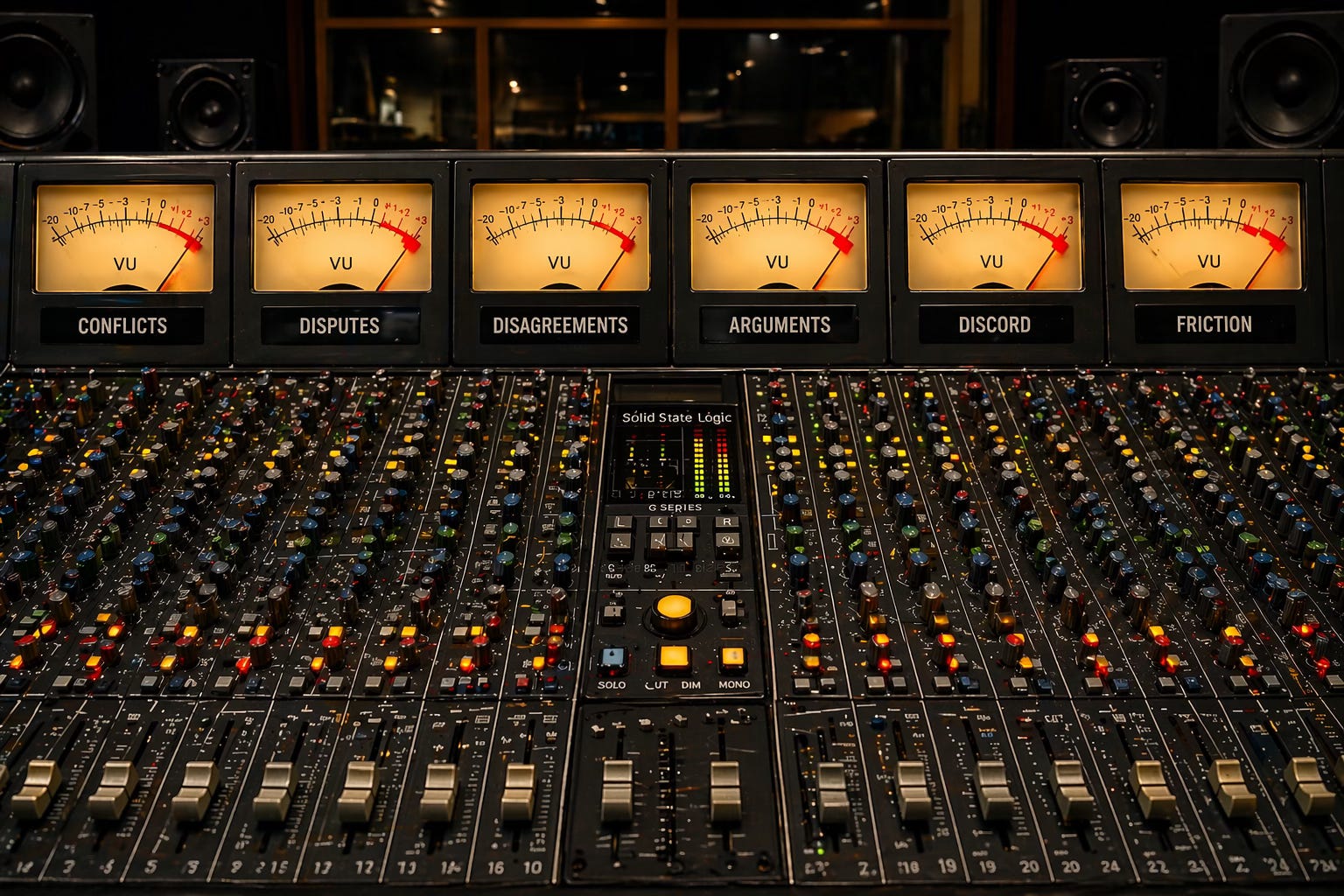
In my former life, I spent a lot of time in recording studios. Even though it has been a long while since I have recorded music, I clearly recall working with a talented mixer. Now that I have become a mediator, I think that practitioners of dispute resolution can be inspired by those people because mixing and mediating have more in common than anyone would normally expect.
Here’s what I mean.
When a mixing engineer sits down to work, the first thing they do is play everything at once. All the tracks: drums, bass, guitars, keys, vocals, whatever got laid down during recording. And it probably will not sound very coherent. Not because anything was recorded badly. Because nothing was recorded to coexist. Each track was captured in isolation, optimized for itself. Together, unprocessed, they step all over each other. The snare disappears. The vocals get buried. Everything fights for the same space.
Sound familiar?
“Positions are merely the surface frequencies. Underneath are interests.”
The instinct of a novice mixing engineer is to think mixing is about volume; turn this up, turn that down. But the real work happens somewhere else. Two instruments occupying the same frequency range will mask each other no matter how carefully you adjust the levels. The engineer’s solution isn’t to eliminate one of them. It’s to carve out just enough space in one so the other can be heard. Both tracks stay. Neither dominates. The listener may not notice the adjustments. They just notice the song finally breathes.
There’s also what engineers call dynamics. Sometimes a track wasn’t recorded poorly, it’s just unmanaged. Too much variation in volume. Loud peaks and soft valleys. You don’t cut it. You contain it (what engineers call “compression”), so it can be more balanced and all the elements can be heard.
And underneath all of it, a good engineer keeps returning to one question: what is this mix for? What’s the song trying to do? Every decision has to serve that, or you’re just moving knobs.
I think about this constantly in mediation.
Parties in conflict are like unprocessed tracks. Each one sounds completely coherent on their own. Their version of events holds together, their frustration is real, their position makes sense from where they’re standing. Put them in the same room and you get that same first playback: everyone talking, no one is being heard…the whole thing collapsing into a messy noise.
Mediation isn’t about picking a winner. It’s about creating an environment where both parties can be heard and understood.
When parties state their positions (i.e., what they say they want), those positions can look irreconcilable. Positions are merely the surface frequencies. Underneath are interests. What people actually need, what’s really driving the demand.
The “why”.
“Dispute resolution is a balancing act, not subtraction.”
The mediator’s job is to work at that level, carving out space where both sets of needs can coexist.
The dynamics problem shows up too. In almost every session, one party is louder; more confident, more practiced at making their case. Or they are literally louder, yelling at the other party. Left alone, they fill the room and the other party goes quiet.
I don’t try to silence the louder voice. I work on “mixing” up the gain on the one being masked: more direct questions, more space, more careful attention. A room where one person isn’t being heard isn’t a mediation. It’s a monologue with an audience.
And always, the same question underneath everything: what is this resolution for? I don’t decide that. The parties do. My job is to keep that question alive in the room so every decision moves toward something rather than nowhere.
Most people think of conflict resolution as a zero-sum transaction. Somebody wins, somebody loses, or you split the difference and everybody walks away slightly unhappy. A mixing engineer demonstrates something I’ve come to believe: dispute resolution is a balancing act, not subtraction.
In a finished mix, nothing got deleted. The snare is still there. So is the vocal that was threatening to disappear in the second verse. The engineer just found the configuration where everything stops fighting and starts contributing. What comes out the other end is something none of the individual tracks contained on their own.
That’s what a good mediation feels like when it works. Both parties leave with something they couldn’t have gotten alone.
That’s the final mix I’m trying to make… just in a different kind of room.
I am Steven Corn, a certified professional mediator with a passion for adding peace to the world by resolving disputes in a safe, constructive and productive environment.
Metis Mediation Services www.metismediationservices.com